My driver was not very consistent yesterday, but it was okay. My irons were okay, too. I didn’t hit all the greens, but overall, I played decently.
I lost anyway. And I finished with zero birdies.
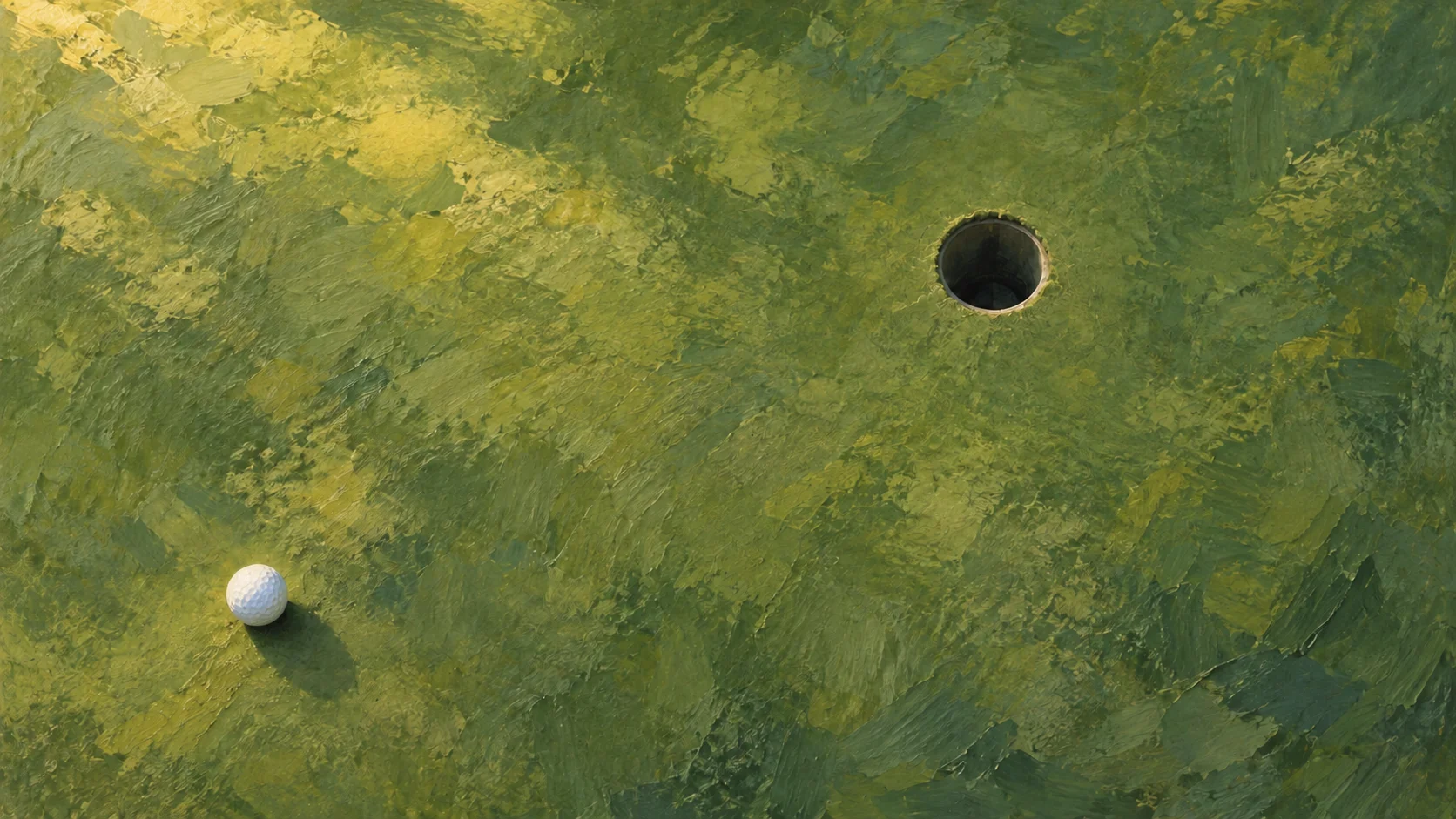
The disappointing part was the putting—but I should be more specific. I didn’t miss the short putts. It was those putts from 10 to 15 feet, sometimes closer to 20 feet, that wouldn’t go in.
Those are the chances that stayed with me afterward. After a decent drive and a decent iron shot, I wanted something to show for the hole. Instead, I finished the round without a birdie.
My game wasn’t falling apart. I just couldn’t get enough out of it.
Before deciding how badly I had putted, though, I wanted to put a number beside the disappointment. How often do professionals actually make these putts?
The PGA Tour’s statistical profile entering the 2021 FedExCup Playoffs listed a Tour average of 30.07% from 10–15 feet. That historical benchmark appears in the Tour’s 2025 BMW Championship broadcaster packet. In everyday terms, that is about three makes in ten attempts—and seven misses. It describes the distance band, not a putt from exactly 15 feet. PGA Tour statistical profile
Three out of ten. That gives me something to think about.
Even professionals miss most of these putts. And those three makes don’t arrive at regular intervals. They can come close together or be separated by a frustrating stretch of misses.
Knowing that doesn’t remove the disappointment from yesterday. But it helps me set a more reasonable goal than expecting every good birdie chance to become a birdie.
For now, I would like to aim for one make in five attempts from 10–15 feet, measured across several rounds. That is a personal starting target, not an amateur average or a promise that the fifth putt will drop. I would track the 15-to-20-foot attempts separately.
But there is another part to that goal. If I want to make one out of five, I first need to give myself those five chances.
That brings me back to my irons—and, before the irons, my driver. A ball in the fairway generally gives me a cleaner lie and a better opportunity to control the approach. Then the iron shot has to do more than reach the green; it has to leave a putt in a range where I have a reasonable chance. Hitting the green and leaving 40 feet is a different opportunity from leaving 12 feet. Five birdie chances from 10–15 feet would be a demanding goal in itself, and even then, making one would not be guaranteed.
So the putting target gives the rest of my game a direction: get the drive into a useful position, hit the approach closer, and convert a share of the chances I create.
That doesn’t mean firing at every flag. Depending on the pin and the trouble around it, the sensible approach may leave a longer putt. But better iron accuracy would give me more opportunities without requiring the putter to rescue everything.
Looking back, “my driver was okay and my irons were okay” may be a fair description of how I played. It also leaves room for improvement. If I want more birdies, I need to consider both how often I make those mid-range putts and how often I actually have them.
I still wish a few had gone in yesterday. The statistics haven’t changed that.
They have given me a clearer goal, though. Give myself more chances from 10–15 feet, and work toward making one in five over time. Some days, the result will still be zero. But that is a more useful plan for the next tournament than simply telling myself to putt better.